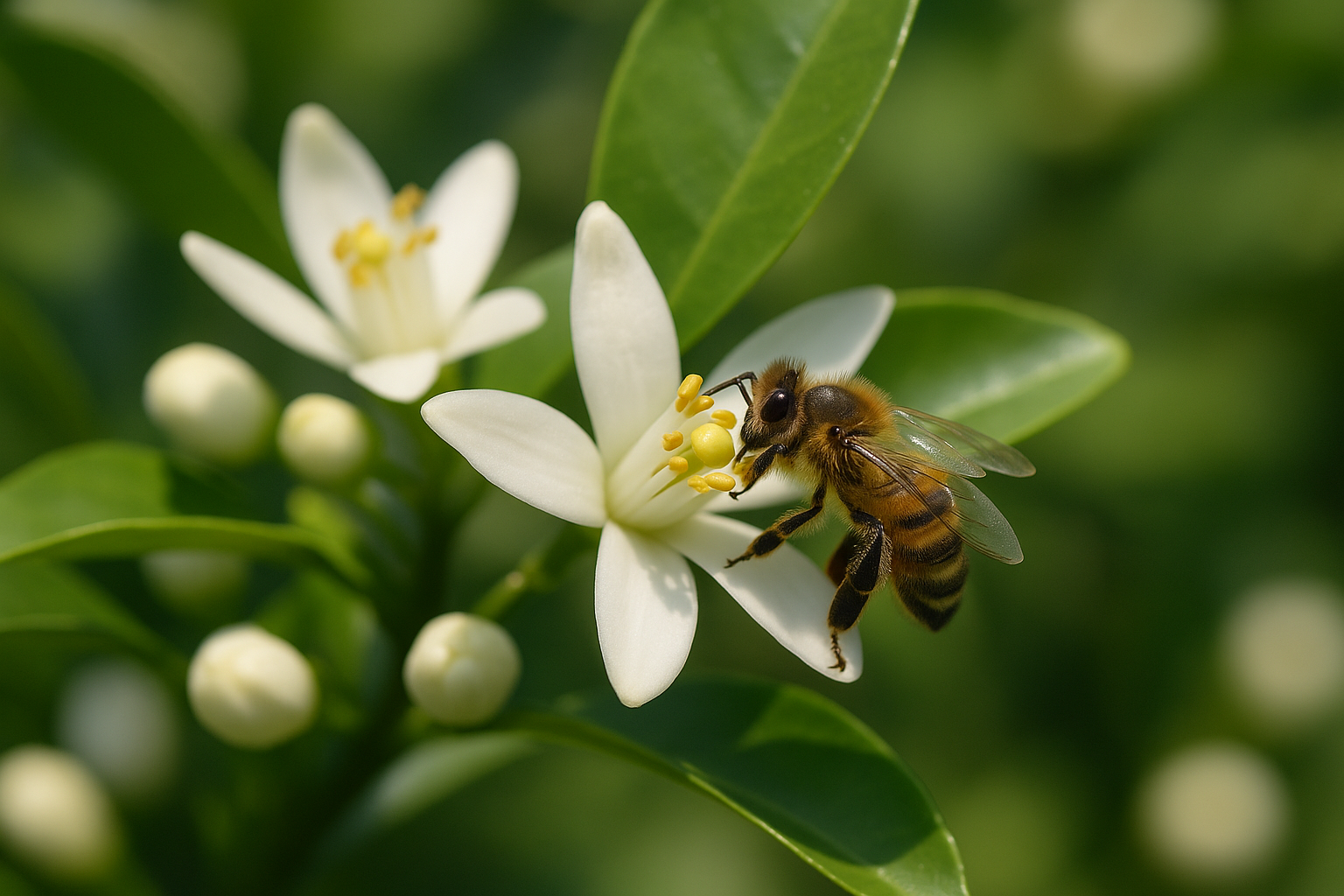
The rise of angiosperms and the evolution of the honeybee are not merely parallel events; they represent a high-stakes evolutionary gamble that began 100 million years ago. In the mid-Cretaceous, life pivoted from the uncertainty of wind-driven pollination to the precision of “mobile reproductive agents.” Plants discarded the dream of locomotion, outsourcing their reproductive fate to the ancestors of Apis. This pact stands as a sophisticated evolutionary equilibrium—a strategic investment where plants secured genetic selection, and bees attained nutritional monopoly.
This biological contract is not a simple friendship, but a rigorous synchronization of sensory hardware and chemical signaling, refined over deep time to ensure the survival of both lineages against the backdrop of a changing planet.
🐝 Table of Contents
- 📡 1. The Bio-Interface — Ultraviolet Signaling and Perception
- 🧠 2. Cognitive Co-evolution — Learning Performance and Floral Complexity
- ⚖️ 3. Thermodynamic Optimization — The Cost of Nectar and Flight
- 🌎 4. Global Conquest — How Symbiosis Defined the Modern Biome
- ✨ A Poetic Reflection
📡 1. The Bio-Interface — Ultraviolet Signaling and Perception
Plants communicate with bees through a spectrum invisible to the human eye. By utilizing the 300–650nm range, flowers manifest “nectar guides”—intricate ultraviolet patterns that act as landing strips for foraging bees.
- Sensory Syncing: Bees developed trichromatic vision optimized for these signals, allowing them to distinguish high-reward floral resources from the background noise of green foliage.
- Signal Honesty: These patterns often change post-pollination, signaling to the bee that the “contract” for that specific flower has been fulfilled, thereby optimizing the bee’s foraging efficiency.
🧠 2. Cognitive Co-evolution — Learning Performance and Floral Complexity
The diversification of floral morphology (Floral Lock) acted as a primary driver for the expansion of bee intelligence. To access hidden nectar, bees had to evolve complex problem-solving skills.
- Operant Learning: Bees demonstrate remarkable spatial memory and the ability to learn complex motor tasks to manipulate specific flower types.
- Niche Partitioning: As flowers evolved specialized shapes, bees responded with morphological adaptations, such as varying proboscis lengths, leading to a sophisticated division of ecological resources.
⚖️ 3. Thermodynamic Optimization — The Cost of Nectar and Flight
The chemistry of nectar is a masterclass in metabolic balancing. Plants must produce a reward that justifies the high energetic cost of bee flight without depleting their own resources.
- Sugar Concentration: Nectar viscosity is fine-tuned to the suction mechanics of the bee’s proboscis; too dilute, and the energy return is negative; too viscous, and it becomes impossible to extract.
- Amino Acid Signaling: Beyond sugar, plants lace nectar with specific amino acids and secondary metabolites that influence bee health and memory, subtly “manipulating” the pollinator’s loyalty.
🌎 4. Global Conquest — How Symbiosis Defined the Modern Biome
This partnership catalyzed the “Angiosperm Explosion.” By enabling precise, targeted gene flow, bees allowed plants to survive at low densities, facilitating the colonization of diverse environments from tropical canopies to alpine meadows.
The result was the creation of the modern terrestrial biosphere. Without this 100-million-year dialogue, the lush complexity of our current forests and the abundance of our global food supply would remain an evolutionary impossibility.
✨ A Poetic Reflection
The flower distorted its own form, just to hold the echo of a single wingbeat forever.
🐝→ Next Post (Apis 3: Genetic Mapping and the Great Dispersal)
🐝← Previous Post (Apis 1: The Cretaceous Alchemist)
🐝→ Back to Series: The Apis Records

コメント