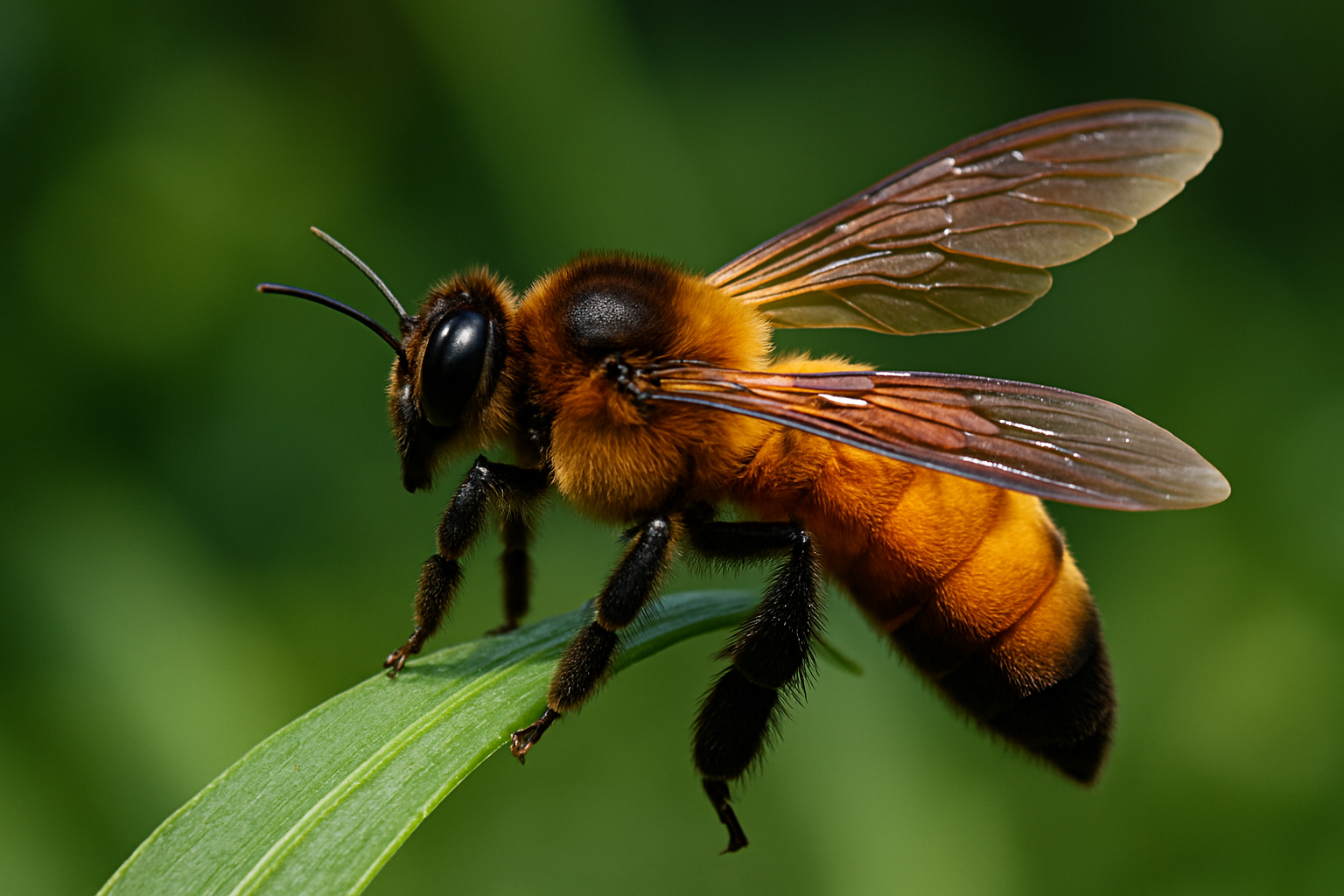
In the humid canopies and sheer cliff faces of tropical Asia, a massive golden fan hangs precariously against the sky. This is the fortress of Apis dorsata—the Giant Honey Bee. Unlike their cavity-dwelling cousins who retreat into the safety of hollow trees, these giants reject enclosure. They construct a single, immense vertical comb in the open air, exposed to the elements and predators alike. This architectural defiance is not a vulnerability, but a profound statement of collective intelligence and raw ecological power.
📊 Data Profile: Apis dorsata
- Scientific Name: Apis dorsata (Fabricius, 1793)
- Common Name: Giant Honey Bee
- Body Size: 17–20 mm (The largest of the genus Apis)
- Nesting Style: Single large vertical comb (up to 1.5m in diameter)
- Habitat: Tropical rainforests and high-altitude cliffs
- Strategy: Migratory foraging and open-air defense
To witness an Apis dorsata colony is to see a superorganism that has mastered the art of living on the edge, transforming a simple wax structure into a dynamic, shifting shield of life.
🐝 Table of Contents
- 🏗️ 1. The Architecture of Exposure — Why Nest in the Open?
- 🌊 2. The Living Armor — Shimmering Waves as Visual Defense
- 🗺️ 3. The Vertical Nomads — Seasonal Migration Patterns
- 🌳 4. Guardians of the Canopy — Pollination at the Extremes
- ✨ A Poetic Reflection
🏗️ 1. The Architecture of Exposure — Why Nest in the Open?
While most bees prioritize concealment, Apis dorsata utilizes scale as its primary defense. By constructing a single, massive comb exposed to the air, they bypass the spatial constraints of hollow cavities.
- Unrestricted Growth: A single colony can house over 50,000 workers on a comb exceeding 1.5 meters in width, allowing for an overwhelming concentration of labor and defensive force.
- Strategic Attachment: Nests are typically attached to high tree limbs or overhanging cliffs (often called “bee trees” or “bee cliffs”), placing them out of reach for most terrestrial predators.
🌊 2. The Living Armor — Shimmering Waves as Visual Defense
Because the nest is visible, Apis dorsata has evolved one of the most spectacular collective behaviors in the insect world: the “shimmering wave.”
- Wave Dynamics: Upon detecting a threat, thousands of bees flip their abdomens upward in a synchronized, rhythmic sequence. This creates a flickering, metallic wave that travels across the face of the nest.
- Target Disruption: This visual barrage confuses the depth perception of birds and hornets, signaling that the colony is alert and ready for a mass counter-attack.
🗺️ 3. The Vertical Nomads — Seasonal Migration Patterns
Apis dorsata are the great wanderers of the bee world. They do not maintain a permanent home but follow the “bloom of the forest” across vast distances.
- Long-Distance Transit: Colonies are known to migrate hundreds of kilometers between the plains and the mountains, perfectly timing their arrival with the peak flowering of key tree species.
- High Metabolism: Their large body size allows for more efficient long-distance flight and the ability to carry larger payloads of nectar, supporting their nomadic lifestyle.
🌳 4. Guardians of the Canopy — Pollination at the Extremes
As the primary pollinators of the tropical forest canopy, Apis dorsata plays an irreplaceable role in maintaining forest genetics. They facilitate gene flow between isolated emergent trees that other, smaller bees cannot reach.
In the high-stakes environment of the Asian jungle, they are the vital link that ensures the continuity of the forest’s most majestic flora, acting as the silent architects of the green skyline.
✨ A Poetic Reflection
A golden curtain suspended in the void—an impregnable fortress of the cliffs that never bows to the wind.
🐝→ Next Post (Apis 7: The Dark Bees of High Altitudes)
🐝← Previous Post (Apis 5: The Eastern Survivor)
🐝→ Back to Series: The Apis Records
コメント