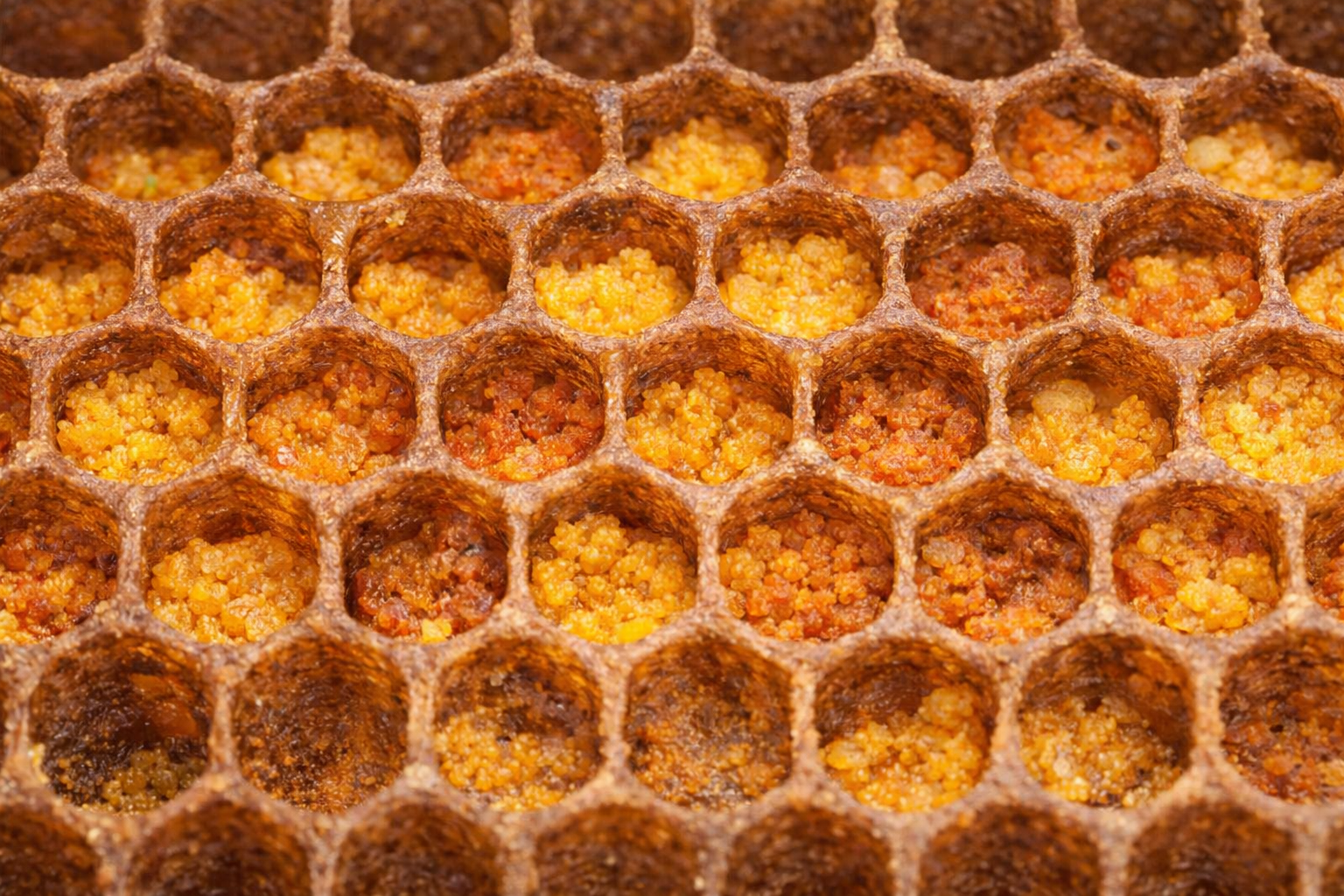
For the honeybee, pollen is the singular, irreplaceable “protein currency” required to rear the next generation. Yet, raw pollen grains are encased in exine—a nearly indestructible outer shell that renders their nutrients inaccessible to simple digestion. To overcome this botanical fortress, the bees employ a process of biochemical alchemy known as the creation of “Bee Bread.” This is not merely storage; it is a sophisticated “solid-state fermentation.” Through symbiosis with beneficial microbes, raw pollen is upgraded into a pre-digested, nutrient-dense superfood that ensures the survival of the brood.
🐝 Table of Contents
- 🏗️ 1. The Pollen Press — Engineering an Anaerobic Micro-Environment
- ⚗️ 2. Lactic Acid Fermentation — The Role of Symbiotic Bacteria
- 🧬 3. Bioavailability — Breaking the Exine Barrier
- 🧪 4. Nutritional Fortification — The Microbe-Derived Vitamin Boost
- ✨ A Poetic Reflection
🏗️ 1. The Pollen Press — Engineering an Anaerobic Micro-Environment
The transformation begins with a physical process. As foragers return with pollen loads, house bees take the pellets and pack them tightly into the wax cells using their mandibles and foreheads. This “pressing” is deliberate. By mixing the pollen with small amounts of honey and regurgitated enzymes, the bees eliminate air pockets, creating the specialized anaerobic conditions necessary for the subsequent fermentation stage.
⚗️ 2. Lactic Acid Fermentation — The Role of Symbiotic Bacteria
Once the cell is sealed with a thin film of honey, the biological engine takes over. Lactic Acid Bacteria (LAB), such as various Lactobacillus species derived from the bee’s own digestive tract, begin to proliferate. This fermentation process lowers the pH of the pollen mass to approximately 4.0. This acidification serves as a powerful antimicrobial barrier, preventing the growth of spoilage-causing fungi and pathogenic bacteria, thus allowing the “bread” to be stored for months or even years without decay.
🧬 3. Bioavailability — Breaking the Exine Barrier
The true genius of bee bread lies in its enhanced “bioavailability.” Raw pollen is biologically locked. During fermentation, microbial enzymes partially degrade the tough cellulose and sporopollenin that compose the pollen’s exine. This “pre-digestion” allows the larvae and nurse bees to access the vital proteins, lipids, and amino acids that would otherwise pass through the gut unabsorbed. Without this fermentation, the cost of extracting nutrients from pollen would be metabolically prohibitive.
🧪 4. Nutritional Fortification — The Microbe-Derived Vitamin Boost
The fermentation of bee bread is a value-added process. The metabolic activity of the bacteria doesn’t just preserve the pollen; it enriches it. The levels of essential B-vitamins, folic acid, and Vitamin K increase significantly during the transition from raw pollen to bee bread. Furthermore, the bacteria neutralize certain plant-derived toxins and inhibitory substances, ensuring that the primary food source for the developing bees is not only nutritious but safe.
✨ A Poetic Reflection
It is a tiny bakery functioning in the silence of the cell, where the breath of microbes turns hardened seeds into the bread of life.
🐝→ Next Post (Apis 25: The Resin Shield)
🐝← Previous Post (Apis 23: The Enzyme Laboratory)
🐝→ Back to Series: The Apis Records
コメント