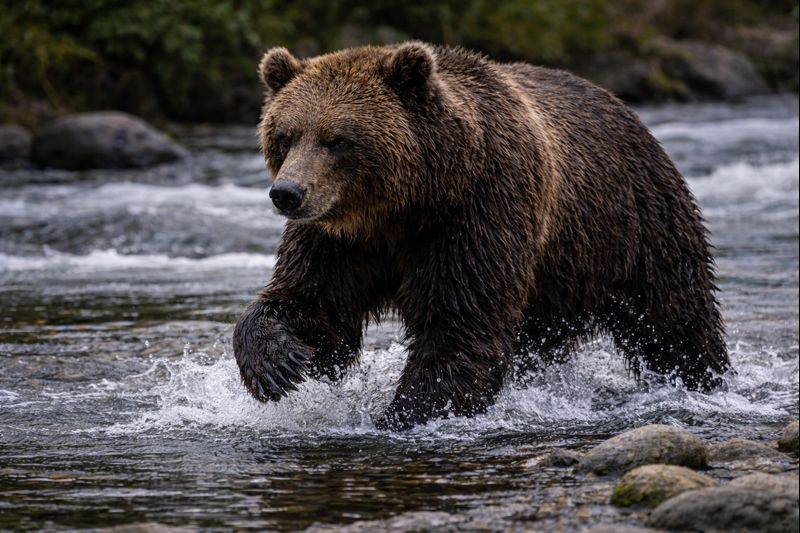
Hibernation is often misunderstood as a long, peaceful sleep. In reality, it is a staggering feat of physiological engineering that pushes the boundaries of mammalian biology. While a human confined to a bed for months would suffer from muscle atrophy, bone loss, and organ failure, a bear emerges from its den with its physical integrity remarkably intact.
How does a 500-pound predator cease eating, drinking, and excreting for half a year without dying of urea poisoning or losing the strength to hunt? The answers lie in a complex series of metabolic adaptations that scientists are now studying to unlock new frontiers in human medicine, from space travel to geriatric care.
🐻 Table of Contents
- 🔬 1. The Urea Cycle Revolution — Preventing Organ Failure
- 🦴 2. Bone and Muscle Preservation — Defying Atrophy
- 💓 3. Cardiac and Metabolic Suppression — The Art of “Torpor”
- 🚀 4. From Dens to Deep Space — Medical Applications for Humans
- 🐾 A Poetic Reflection
🔬 1. The Urea Cycle Revolution — Preventing Organ Failure
In any other mammal, the breakdown of protein produces urea, which must be excreted via urine. If kidneys stop functioning, urea builds up to toxic levels. A hibernating bear, however, does not urinate for months.
- Nitrogen Recycling: Bears possess a unique ability to recycle urea nitrogen back into their system to create new amino acids and proteins.
- Microbiome Contribution: Specific gut bacteria play a role in breaking down urea into ammonia, which is then reabsorbed to prevent muscle loss.
- Kidney Stasis: Their kidneys reduce filtration to a minimum, yet they avoid the permanent scarring and failure that would occur in a human patient with similar symptoms.
🦴 2. Bone and Muscle Preservation — Defying Atrophy
One of the most mysterious aspects of bear physiology is their resistance to disuse osteoporosis and sarcopenia (muscle wasting).
- Osteoblast Regulation: Bears maintain a balance between bone formation and resorption even while inactive. They do not lose significant bone mineral density, unlike bedridden humans.
- Shifting Muscle Fibers: Bears exhibit a low rate of muscle protein degradation. Their muscles stay “primed,” allowing them to defend their den or hunt immediately upon waking.
- Calcium Management: They recycle calcium back into their skeletal structure rather than excreting it, maintaining bone strength throughout the winter.
💓 3. Cardiac and Metabolic Suppression — The Art of “Torpor”
Unlike “true” hibernators (like ground squirrels) whose body temperature drops to near freezing, bears maintain a relatively high core temperature. This is known as Torpor.
- Heart Rate Variance: A bear’s heart rate can drop from 50 beats per minute to as low as 8–10 bpm. Interestingly, the heart pauses for several seconds between beats without developing clots.
- Lipid Metabolism: They switch almost exclusively to burning stored brown and white fat for energy, producing metabolic water in the process to stay hydrated without drinking.
- Insulin Resistance: Bears become naturally “diabetic” (insulin resistant) during the fall to put on weight, then “cure” themselves during hibernation—a process that fascinates Type 2 diabetes researchers.
🚀 4. From Dens to Deep Space — Medical Applications for Humans
The “Bear Secret” is more than just a biological curiosity; it is a potential blueprint for the future of human health.
- Space Travel: If humans could induce a bear-like torpor, the muscular and skeletal decay of long-term space flight could be mitigated.
- Critical Care: Understanding nitrogen recycling could lead to new treatments for patients with chronic kidney disease (CKD).
- Elderly Care: The mechanisms bears use to prevent muscle atrophy could unlock therapies for age-related frailty.
🐾 A Poetic Reflection
In the heart of winter, the bear does not merely sleep; it performs a silent, internal alchemy, refining its own life to meet the spring anew.
🐻→ Next Post (Bear 7: Territories and Ranges)
🐻← Previous Post (Bear 5: The Opportunistic Generalist)
🐻🏠 Series Overview: Bears


コメント