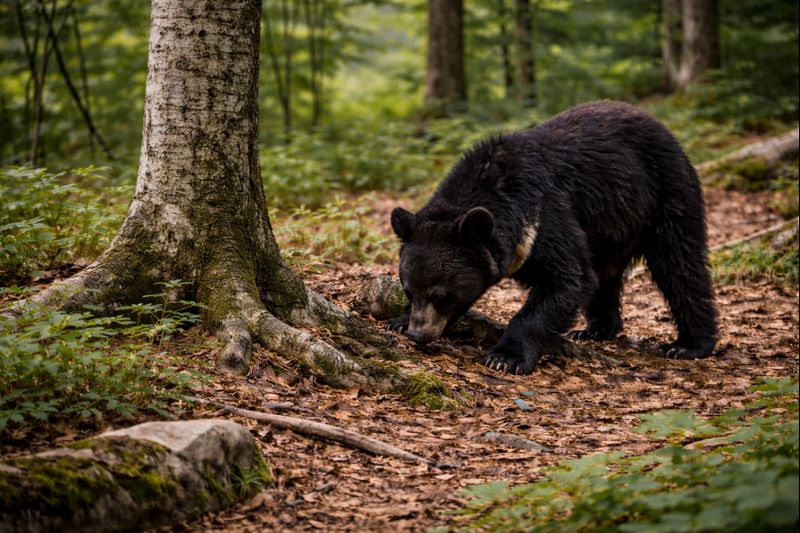
Bears are often portrayed as solitary, silent wanderers of the wild. However, beneath this stoic exterior lies a sophisticated and nuanced system of communication. They do not need a complex vocal language like primates; instead, they “speak” through a subtle choreography of body posture, facial expressions, and chemical signatures left in their wake.
Understanding the language of bears is not merely a biological curiosity—it is essential for survival and coexistence. Every flick of an ear, every shift in gaze, and every scent-marked tree is a message designed to negotiate space, avoid conflict, and ensure the safety of the next generation. In the world of the bear, silence is rarely empty; it is a conversation in motion.
🐻 Table of Contents
- 👂 1. Visual Cues — The Silent Signals of Ears and Eyes
- 🐾 2. Chemical Chronicles — Scent Marking and Pedal Glands
- 🗣️ 3. Vocalizations — Beyond the Roar
- 🚶 4. Posture and Movement — Negotiating the Social Hierarchy
- 🐾 A Poetic Reflection
👂 1. Visual Cues — The Silent Signals of Ears and Eyes
Facial expressions in bears are subtle but definitive. For those who know how to read them, a bear’s face is an open book of its immediate intentions.
- The Ears: Relaxed, forward-facing ears indicate a calm or curious state. Ears pinned flat against the head are a universal sign of aggression, fear, or an imminent charge.
- The Gaze: Direct eye contact is a challenge in the bear world. Dominant bears use a fixed stare to intimidate rivals, while submissive individuals will purposefully look away to signal they are not a threat.
- The Mouth: A slightly open mouth with a relaxed tongue often means the bear is hot or curious. Conversely, “huffing” or popping the jaws (clacking teeth) is a serious warning to back off.
🐾 2. Chemical Chronicles — Scent Marking and Pedal Glands
The most long-lasting and detailed “conversations” happen through scent. Bears leave chemical resumes across the landscape.
- Rub Trees: Bears spend significant time rubbing their backs, necks, and heads against specific trees. This leaves behind hair and scent that communicate the bear’s size, sex, and reproductive status to anyone passing by.
- Pedal Glands: Bears have glands in their paw pads. By performing a “cowboy walk” or twisting their feet into the ground, they grind scent molecules into the earth, creating a trail of information that persists for days.
- Urine Marking: Often combined with rubbing, this provides a highly concentrated chemical signal used primarily during the mating season.
🗣️ 3. Vocalizations — Beyond the Roar
While Hollywood loves to make bears roar, their actual vocalizations are much more varied and often surprisingly soft.
- The “Huff”: A rapid expulsion of air used when a bear is startled or agitated. It serves as a primary warning.
- The Woof: A loud, sharp sound used by mothers to signal cubs to climb a tree immediately for safety.
- Cub Motor-Humming: Nursing cubs produce a rhythmic, vibrating sound similar to a cat’s purr, signaling contentment and a strong bond with the mother.
- Bawling: A distressed, high-pitched cry used by cubs or injured bears to call for help.
🚶 4. Posture and Movement — Negotiating the Social Hierarchy
Bears use their massive bodies to “talk” through the landscape, aiming to resolve disputes without physical fighting, which is energy-expensive and dangerous.
- Standing Upright: Often misinterpreted as a sign of aggression, a standing bear is usually just trying to get a better view or catch a scent. It is a posture of investigation.
- The Bluff Charge: A bear may run toward a perceived threat and stop abruptly, huffing or slapping the ground. This is a sophisticated “test” to see if the intruder will leave without a fight.
- Side-Passing: When two bears meet, they may walk in a parallel or indirect path. This “sideways” movement is a polite way of saying, “I see you, and I am not looking for trouble.”
🐾 A Poetic Reflection
In the twitch of an ear and the scent left upon the pine, the bear writes a silent poem of boundaries and respect.
🐻→ Next Post (Bear 10: Raising the Next Generation)
🐻← Previous Post (Bear 8: Cognitive Complexity)
🐻🏠 Series Overview: Bears


コメント