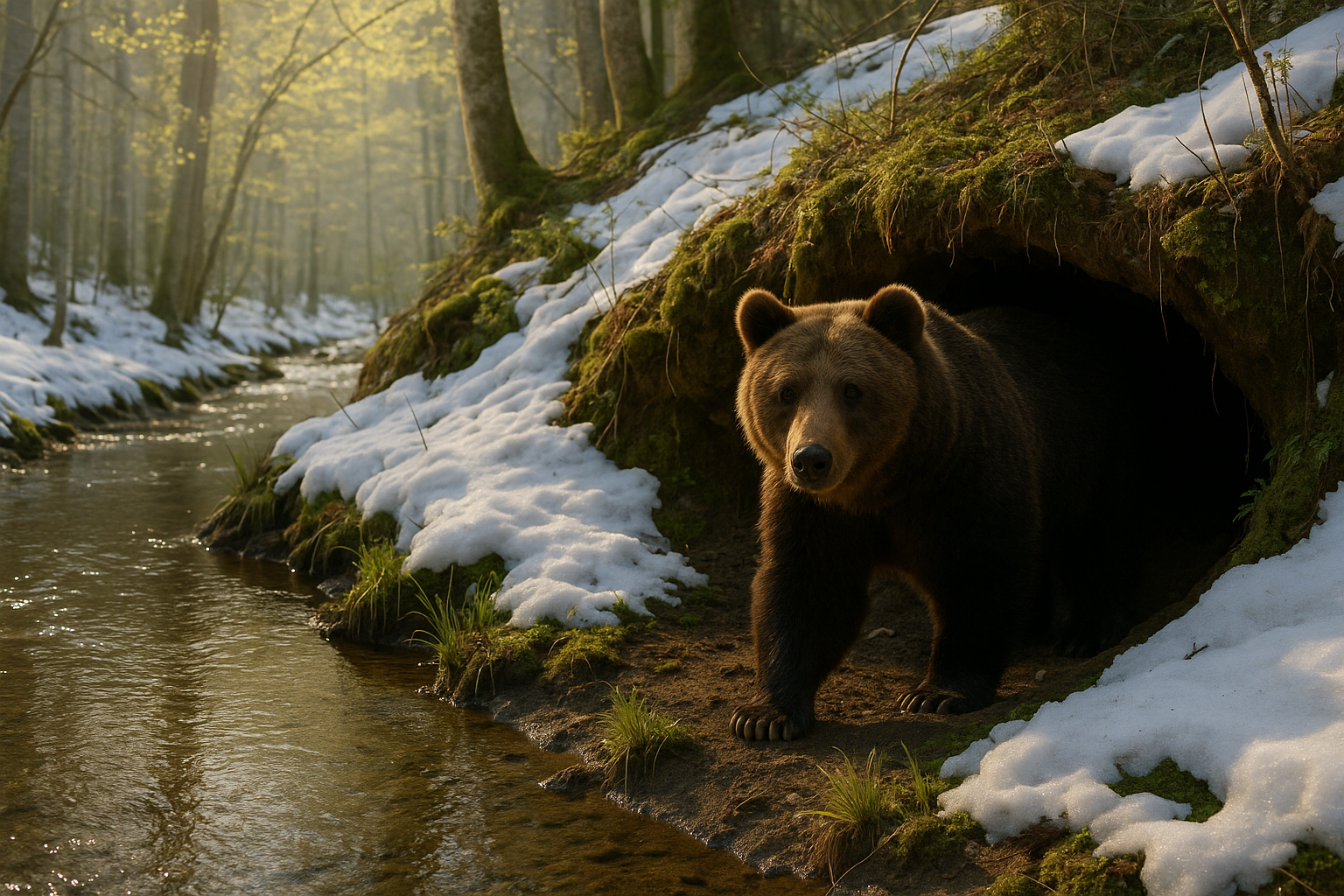
While hibernation is a physiological marvel, it is also a supreme act of environmental strategy. A bear does not simply fall asleep wherever it happens to be; it carefully selects or constructs a sanctuary that will protect its lowered metabolism from the biting cold and the eyes of predators for nearly half the year. This period of stasis is a critical pivot point in the annual cycle of the wild.
The “Science of Hibernation” in an ecological sense is about timing, engineering, and location. It is a calculated gamble where the bear bets its accumulated fat against the duration of the winter. In this chapter, we explore how bears prepare their winter homes and the environmental cues that signal the beginning and end of this long, silent vigil.
🐻 Table of Contents
- 🏗️ 1. Den Engineering — Architects of the Earth
- 🍂 2. The Pre-Hibernation Transition — Hyperphagia and Preparation
- 🌡️ 3. Environmental Cues — What Triggers the Long Sleep?
- 🌲 4. Ecological Impact — The Den as a Habitat
- 🐾 A Poetic Reflection
🏗️ 1. Den Engineering — Architects of the Earth
Bears are meticulous in their choice of winter housing. The quality of a den can mean the difference between survival and death, especially for a pregnant female.
- Excavated Dens: Many Grizzly and Black bears dig their own dens into hillsides, often under the root systems of large trees for structural stability and natural insulation.
- Natural Cavities: Some species utilize hollow logs, caves, or even rock crevices. In the high Arctic, Polar bears exclusively construct “snow dens,” relying on the insulating properties of packed snow to stay warm.
- Bedding Materials: To further insulate against the frozen ground, bears gather spruce boughs, dry grass, and moss to create a “nest” that traps body heat.
🍂 2. The Pre-Hibernation Transition — Hyperphagia and Preparation
Entering hibernation is a weeks-long process. The bear’s behavior changes dramatically as the days shorten.
- Hyperphagia: A period of excessive eating where a bear may consume up to 20,000 calories a day to build the necessary blubber.
- Metabolic Slowdown: Before entering the den, bears begin a “transitional stage” where they eat less but continue to drink water to flush their systems of waste.
- The Walking Hibernation: In the final days, bears may become lethargic, moving slowly near their den site as their heart rate begins to decline even before they settle in for the winter.
🌡️ 3. Environmental Cues — What Triggers the Long Sleep?
Bears do not use a calendar; they read the Earth. The decision to enter the den is driven by a combination of internal and external factors.
- Photoperiod: The decreasing length of daylight is a primary trigger for the hormonal shifts that prepare the body for torpor.
- Food Availability: A sudden drop in available calories (such as a hard frost killing berries) often signals that it is more energy-efficient to sleep than to forage.
- Barometric Pressure: Bears often enter their dens just before a major winter storm, using the falling pressure as a cue to seek shelter before the snow makes travel difficult.
🌲 4. Ecological Impact — The Den as a Habitat
A bear’s den is more than just a bed; it is a temporary feature of the landscape that interacts with the surrounding forest.
- Soil Disturbance: The excavation of dens moves large amounts of earth, aerating the soil and creating opportunities for new plant growth in the spring.
- Abandoned Dens: Once a bear leaves, its den may be repurposed by other wildlife, such as wolves, foxes, or small mammals, providing critical shelter in rugged terrain.
- Nutrient Concentration: The area around a den often becomes a “hotspot” for nutrients as the bear emerges and begins its spring activity, concentrating organic matter in a single location.
🐾 A Poetic Reflection
Between the frozen roots and the heavy snow, the bear waits in the earth’s dark pocket, listening for the first faint tremor of the coming thaw.
🐻→ Next Post (Bear 12: Interspecific Dynamics)
🐻← Previous Post (Bear 10: Raising the Next Generation)
🐻🏠 Series Overview: Bears


コメント