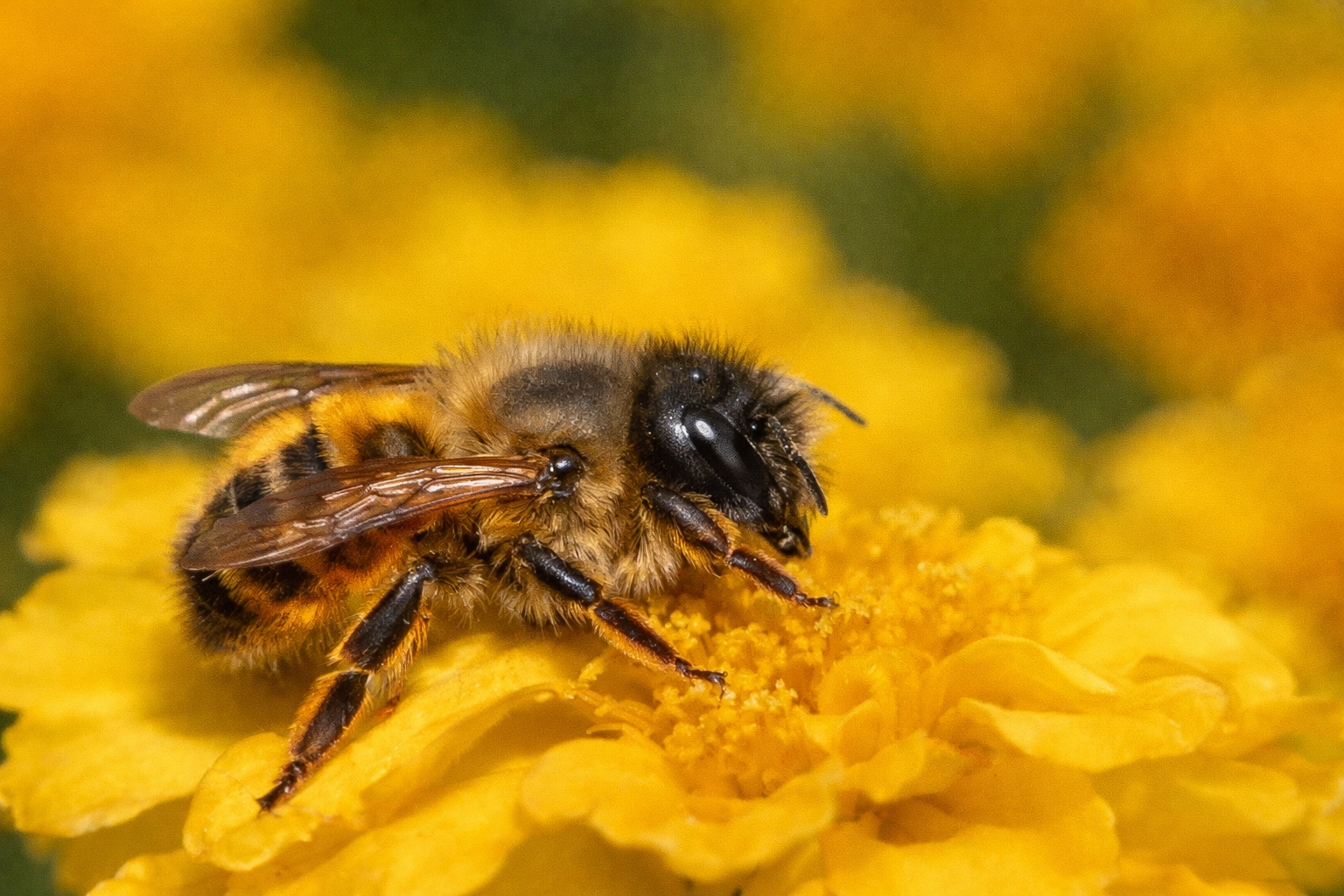
Islands are nature’s grandest evolutionary laboratories. Deep within the ancient rainforests of Borneo and Sumatra lives Apis koschevnikovi—a lineage carved by isolation. Often referred to as the “Malayan Red Bee” due to its striking copper-toned chitin, this species is a descendant of ancestors once connected across the vast Sundaland. Their existence is a profound testament to how rising sea levels and subsequent genetic drift can refine a population into a unique biological masterpiece, isolated from the rest of the world by the emerald barrier of the sea.
📊 Data Profile: Apis koschevnikovi
- Scientific Name: Apis koschevnikovi (Enderlein, 1906)
- Common Name: Koschevnikov’s Bee / Red Bee of Borneo
- Body Color: Distinctive reddish-orange or mahogany tones
- Nesting Style: Cavity-nester (Tree hollows in primary forests)
- Primary Habitat: Peat swamp forests and lowland rainforests of Sundaland
- Conservation Status: Threatened by habitat fragmentation
To understand Apis koschevnikovi is to witness the “Founder Effect” in slow motion—a story where geographic solitude becomes the primary driver of speciation and survival.
🐝 Table of Contents
- 🏝️ 1. The Sundaland Legacy — Geographic Isolation and Speciation
- ⏰ 2. Temporal Segregation — The Mechanics of Reproductive Isolation
- 🧬 3. Genetic Drift — The Emergence of the Red Phenotype
- 💧 4. Peat Swamp Specialists — Adapting to Extreme Humidity
- ✨ A Poetic Reflection
🏝️ 1. The Sundaland Legacy — Geographic Isolation and Speciation
During the Pleistocene, the islands of Indonesia and Malaysia were part of a single landmass known as Sundaland. As the ice caps melted and sea levels rose, populations of the ancestral Apis were trapped in the high-ground forests of Borneo and Sumatra.
- The Barrier of Water: The resulting isolation cut off gene flow from the continental populations of Apis cerana, allowing A. koschevnikovi to drift toward its own unique genetic and morphological identity.
- Island Gigantism/Dwarfism: While not extreme, the specific environmental pressures of Borneo influenced its size and foraging range to match the island’s floral density.
⏰ 2. Temporal Segregation — The Mechanics of Reproductive Isolation
One of the most fascinating aspects of their survival is how they maintain species purity while sharing the same forests with other honeybee species. They utilize “Temporal Isolation.”
- Mating Windows: Apis koschevnikovi drones take flight for their nuptial flights at a specific time of day that does not overlap with Apis cerana. By synchronizing their reproduction to a unique clock, they prevent accidental hybridization.
- Sensory Tuning: This requires a highly specialized internal circadian rhythm, tuned to the specific light intensities of the Sundaland canopy.
🧬 3. Genetic Drift — The Emergence of the Red Phenotype
The distinctive reddish-orange color of these bees is a classic example of genetic drift in a small, isolated population. Characteristics that might be neutral or rare in a large population can become dominant in an island setting.
This copper chitin may also provide specific thermoregulatory advantages in the hyper-humid, low-light environment of the peat swamp forest floor, where traditional cooling methods like wing-fanning are less effective due to high ambient moisture.
💧 4. Peat Swamp Specialists — Adapting to Extreme Humidity
Apis koschevnikovi is inextricably linked to the primary peat swamp forests. They have evolved to manage the fungal and bacterial pressures of these high-humidity environments, likely through the use of specialized antimicrobial resins and propolis derived from endemic flora.
As these ancient forests vanish, so too does the specialized knowledge held within the genome of the Red Bee—a biological ledger that has taken millions of years to write, and which can never be recovered once lost.
✨ A Poetic Reflection
A glow of amber polished within the cage of an island—where the solitude of the sea perfected a single beauty.
🐝→ Next Post (Apis 11: The Chitin Armor)
🐝← Previous Post (Apis 9: The Shadow Gatherers)
🐝→ Back to Series: The Apis Records
コメント