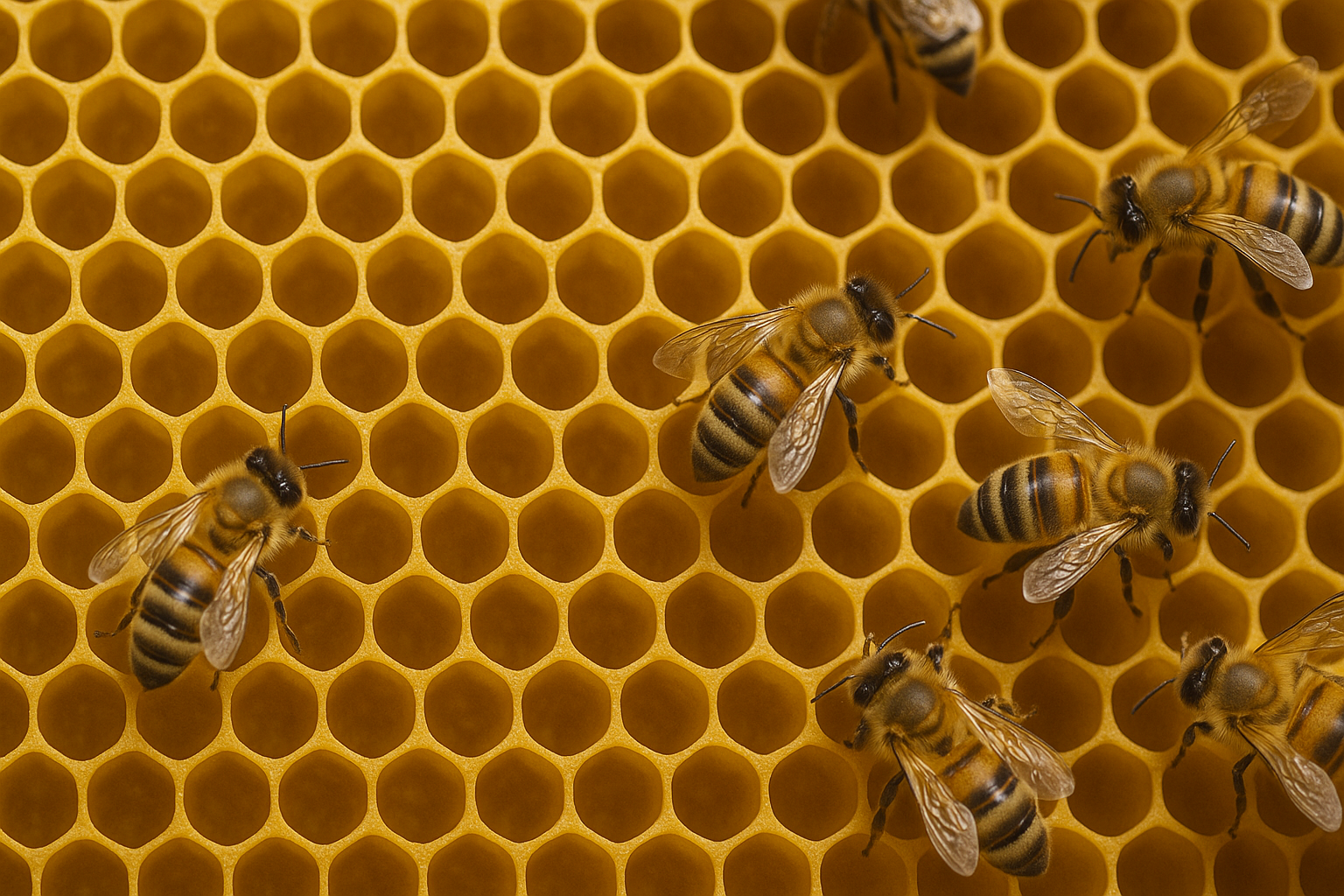
In the world of Apis, the term “worker” does not describe a static job, but a dynamic career path that evolves with time. From the moment of emergence, a worker bee undergoes a series of behavioral metamorphoses: starting as a hive cleaner, advancing to a specialized nurse, and finally transforming into a daring scout venturing into the unknown. This system, known as “Temporal Polyethism,” is an evolutionary masterpiece that converts the physiological aging of the individual into an optimized labor distribution for the superorganism.
📊 Data Profile: Worker Career Path
- Internal Labor (Days 1–20): Cleaning, Nursing (Glandular secretion), and Hive Construction.
- External Labor (Days 21+): Foraging and Scouting for new resources.
- Hormonal Engine: Juvenile Hormone (JH) titers drive the transition from nest to field.
- Neural Flexibility: Reversible behavioral states based on colony demand (Social Regulation).
- Risk Allocation: Oldest bees take on the highest-risk external tasks.
To analyze the worker’s life is to witness a continuous biological restructuring, where brain chemistry and glandular function shift in perfect harmony with the collective needs of the hive.
🐝 Table of Contents
- 🍼 1. The Glandular Peak — Nursing and the Production of Life
- 🕰️ 2. The Hormonal Clock — Juvenile Hormone as a Behavioral Switch
- 🧠 3. The Scout’s Mind — Neurochemistry of Novelty Seeking
- ⚖️ 4. Social Homeostasis — Flexible Labor in Crisis
- ✨ A Poetic Reflection
🍼 1. The Glandular Peak — Nursing and the Production of Life
The first professional peak for a worker occurs in her second week of life. Her hypopharyngeal and mandibular glands reach maximum development, allowing her to secrete the protein-rich “bee milk” and Royal Jelly required for larval growth.
During this stage, the bee is a biological factory of nutrition. She is hyper-sensitive to the chemical pheromones emitted by hungry larvae, spending her days in a state of constant, rhythmic feeding. This “Nursing Phase” is the foundation upon which the next generation is built, requiring intense metabolic investment.
🕰️ 2. The Hormonal Clock — Juvenile Hormone as a Behavioral Switch
As the bee ages, her endocrine system undergoes a dramatic shift. The rising levels of Juvenile Hormone (JH) act as a master switch, triggering the atrophy of her nursing glands and the development of her flight capacity.
This hormonal transition initiates “Pre-foraging” behaviors, such as orientation flights to memorize the hive’s location. The JH titer effectively pushes the bee further from the center of the comb toward the periphery and eventually out of the entrance, timing her exit to coincide with her physiological maturation.
🧠 3. The Scout’s Mind — Neurochemistry of Novelty Seeking
Not all foragers are scouts. While most workers follow established routes, a elite percentage of bees—Scouts—actively seek out new nectar sources. This behavioral distinction is reflected in their brain chemistry.
Scouts exhibit significantly different gene expression patterns in their brains, specifically in pathways related to dopamine and glutamate signaling. Much like human “novelty seekers,” scouts are biologically predisposed to take risks and explore unknown territories. This specialized “intel unit” ensures that the colony can adapt to a rapidly changing floral landscape.
⚖️ 4. Social Homeostasis — Flexible Labor in Crisis
The brilliance of polyethism lies in its flexibility. While age-governed, the system is highly responsive to social cues. If a predator wipes out a significant number of foragers, young nurses can accelerate their development to fill the gap.
Conversely, if foragers are prevented from leaving due to weather, their presence in the hive produces social inhibitory signals (such as Ethyl Oleate) that delay the maturation of younger bees. This “Social Homeostasis” ensures that the hive maintains an optimal balance between its internal larder and external supply lines, no matter the external pressures.
✨ A Poetic Reflection
It is a silent reincarnation—where the gentle hands that rocked the cradle become the wings that cut through the storm.
🐝→ Next Post (Apis 19: The Waggle Calculus)
🐝← Previous Post (Apis 17: The Drone’s Singularity)
🐝→ Back to Series: The Apis Records
コメント