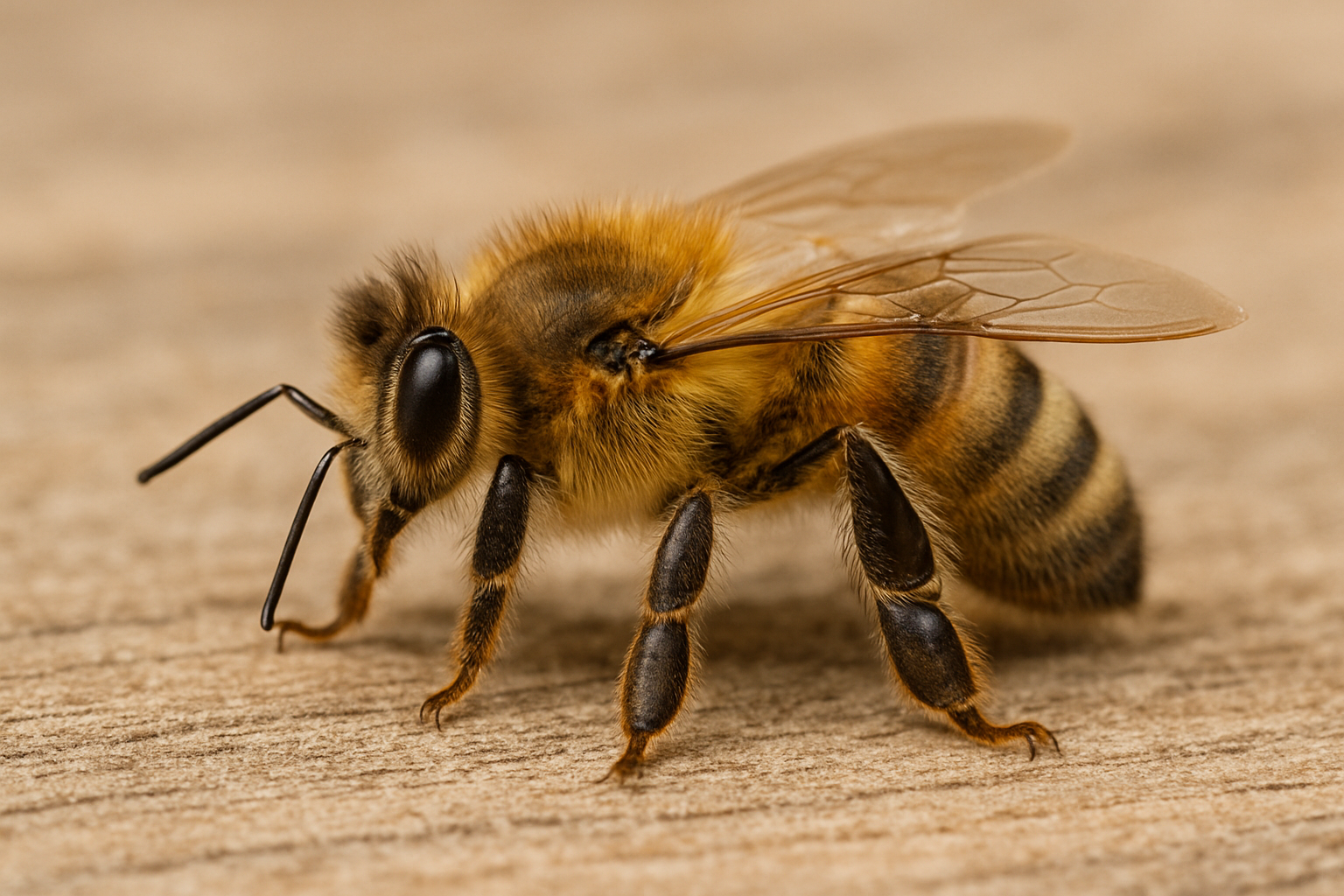
Apis mellifera—literally “the honey-bearing bee”—is the undisputed “Western Sovereign” of the insect world, boasting the most extensive geographical range of any bee species. They are not a monolithic entity but a diverse complex of over 30 recognized subspecies. From the frozen landscapes of Northern Europe to the scorching expanses of the Sahara, their dominion is a testament to an extraordinary phenotypic plasticity and a collective capacity for environmental response.
| 📊 Academic Data Sheet: Apis mellifera | |
|---|---|
| Scientific Name | Apis mellifera (Linnaeus, 1758) |
| Genome Size | Approx. 236 Mb (High AT-content) |
| Native Range | Africa, Europe, Middle East (Globally introduced) |
| Subspecies Count | 31 recognized extant subspecies |
| Ecological Strategy | Extreme Generalist / Cavity-nester |
| Thermal Tolerance | -30°C (with cluster) to 50°C (with ventilation) |
Their success lies in their ability to treat the entire planet as a laboratory for survival, reconfiguring their physiology and behavior to match the specific rhythm of the land they inhabit.
🐝 Table of Contents
- ❄️ 1. The Nordic Resilience — Thermoregulation in Dark Bees
- ☀️ 2. Mediterranean Prolificacy — The Strategy of the Italian Bee
- 🔥 3. The African Crucible — Defensive Aggression and Survival
- 🧬 4. Local Adaptation — Synchronizing with Floral Calendars
- ✨ A Poetic Reflection
❄️ 1. The Nordic Resilience — Thermoregulation in Dark Bees
In the frigid reaches of Northern Europe, Apis mellifera mellifera (the European dark bee) has evolved distinct physiological traits to endure long, harsh winters.
- Melanism: Their darker chitin allows for more efficient absorption of solar radiation during brief windows of sunlight.
- Metabolic Conservation: They possess a unique ability to minimize metabolic expenditure during winter clusters, allowing them to survive on significantly smaller honey stores than their southern counterparts.
☀️ 2. Mediterranean Prolificacy — The Strategy of the Italian Bee
The Italian bee, Apis mellifera ligustica, represents the opposite end of the strategic spectrum, optimized for the stable and abundant floral resources of the Mediterranean.
- High Fecundity: Known for their explosive brood-rearing capabilities, they maintain large populations throughout the season to maximize honey production.
- Docility: Their reduced defensive aggression made them the global standard for modern apiculture, facilitating the industrialization of pollination services.
🔥 3. The African Crucible — Defensive Aggression and Survival
In environments where predation pressure is relentless, such as East Africa, subspecies like Apis mellifera scutellata have forged a strategy of “aggressive survival.”
- Hyper-Responsiveness: They exhibit rapid defensive mobilization and a high propensity for swarming (absconding), prioritizing the survival of the colony through movement and numbers rather than long-term storage.
- Hybridization: This fierce genetic blueprint eventually gave rise to the “Africanized” honeybees of the Americas, demonstrating the raw power of evolutionary drive.
🧬 4. Local Adaptation — Synchronizing with Floral Calendars
The true genius of Apis mellifera is its capacity for local adaptation. Subspecies have fine-tuned their internal circadian rhythms and foraging thresholds to perfectly coincide with the “floral calendars” of their specific habitats.
This synchronization ensures that the colony’s peak population coincides with the peak nectar flow of indigenous flora, transforming the species into a universal gear within the Earth’s ecological machinery.
✨ A Poetic Reflection
Within their golden frames lie thousands of survival prescriptions, written by the very landscapes they have conquered.
🐝→ Next Post (Apis 5: The Eastern Survivor)
🐝← Previous Post (Apis 3: Genetic Mapping and the Great Dispersal)
🐝→ Back to Series: The Apis Records
コメント