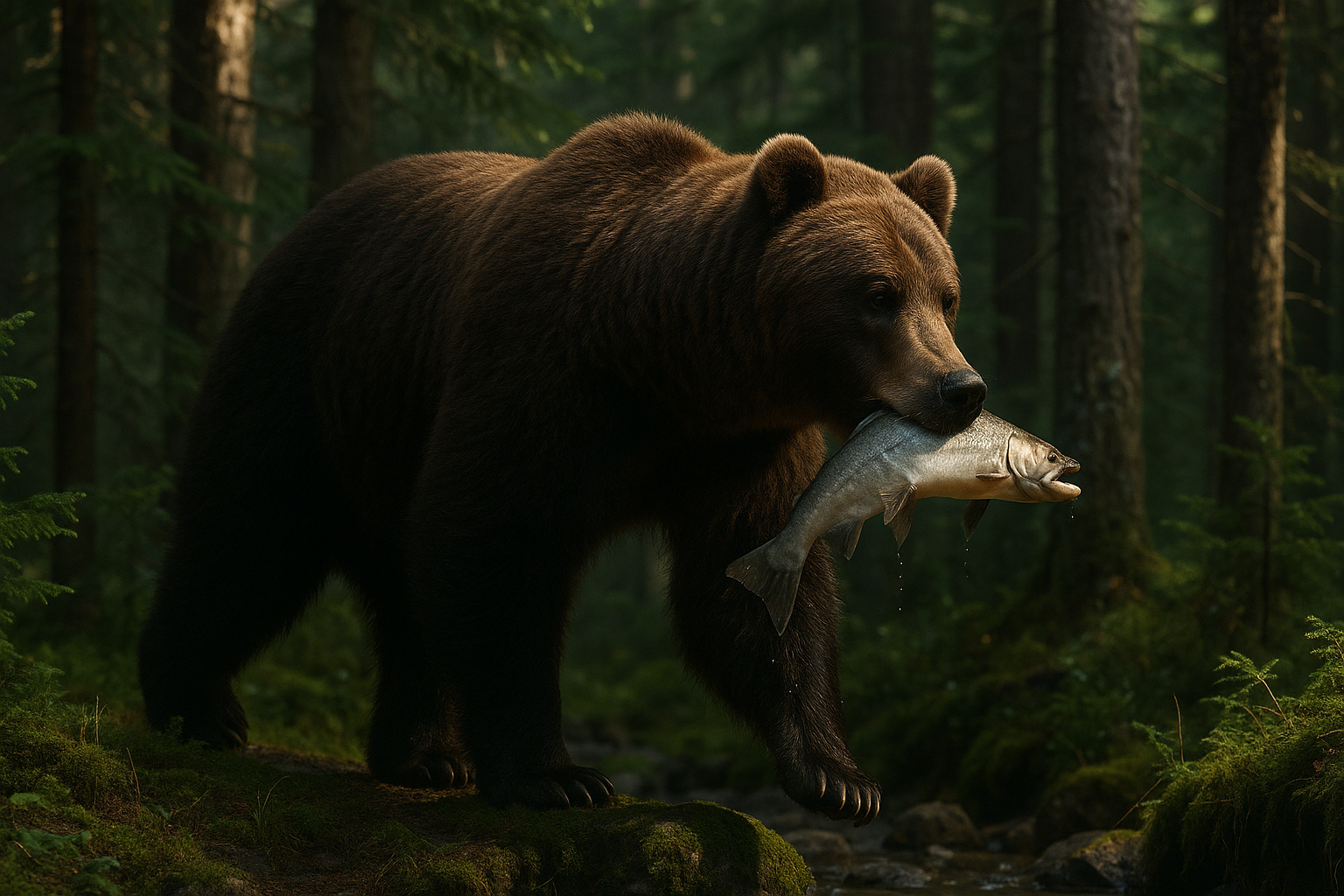
In the intricate theater of the wild, no animal exists in a vacuum. Although bears are often seen as the ultimate solitary rulers of their domain, they are constantly engaged in a complex game of chess with other species. From fierce territorial standoffs with wolf packs to the subtle, opportunistic relationship with scavengers, a bear’s life is defined by its interactions within the ecological community.
The “Interspecific Dynamics” of the bear reveal a fascinating balance of power. They are apex predators, yes, but they are also grand opportunists who would rather steal a kill than hunt, and who must navigate the presence of other formidable carnivores. This chapter explores how bears negotiate their status as both the dominant force and the ultimate scavenger of the wilderness.
🐻 Table of Contents
- 🐺 1. Bears vs. Wolves — The Battle for Carcasses
- 🐱 2. Felines and Rivals — Interactions with Cougars and Tigers
- 🦅 3. The Scavenger Network — Providing for the Forest
- 🐻 4. Intraspecific Competition — When Bear Meets Bear
- 🐾 A Poetic Reflection
🐺 1. Bears vs. Wolves — The Battle for Carcasses
In North America and Eurasia, the relationship between Brown bears and Grey wolves is one of the most studied dynamics in wildlife biology. It is a classic struggle between individual power and pack intelligence.
- Kleptoparasitism: Bears are notorious for “stealing” kills from wolf packs. While a pack can take down an elk, they often cannot defend it against a large Grizzly that simply walks onto the scene and claims the meat.
- Defensive Coexistence: Wolves generally avoid physical combat with bears, as a single blow can be fatal. However, they may “harass” a bear to lure it away from their den or a carcass.
- Impact on Prey: The presence of both predators creates a “landscape of fear” that keeps prey populations healthy and prevents overgrazing in specific areas.
🐱 2. Felines and Rivals — Interactions with Cougars and Tigers
Bears also encounter solitary big cats, leading to intense and sometimes deadly territorial disputes.
- Cougars (Mountain Lions): Similar to their relationship with wolves, bears frequently usurp kills from cougars. Cougars, being smaller, typically retreat and hunt again rather than risk injury.
- Siberian Tigers: In the Russian Far East, the relationship between Brown bears and Siberian tigers is more aggressive. Tigers have been known to actively hunt smaller bears, while large male bears can successfully fend off or even kill tigers in disputes over territory.
🦅 3. The Scavenger Network — Providing for the Forest
Bears act as a central hub for a vast network of smaller scavengers. By moving carcasses and leaving remains, they provide critical calories for the rest of the forest.
- The Commensal Circle: Ravens, eagles, foxes, and wolverines often follow bears, knowing that a bear’s “messy” eating habits will leave behind scraps of fat and bone.
- Nutrient Dispersal: When a bear drags a salmon or a deer into the brush to hide it (caching), they are inadvertently fertilizing the soil and feeding countless insects and small mammals.
🐻 4. Intraspecific Competition — When Bear Meets Bear
Perhaps the most dangerous interaction for any bear is with a member of its own species. Competition for resources and mates is the leading cause of injury among adult bears.
- Size Matters: Social hierarchy is determined by age, sex, and weight. Larger males always have the “right of way” at prime fishing spots.
- Avoidance Strategies: To prevent lethal fights, bears use the communication methods discussed in Chapter 9—scent marking and posture—to signal their presence and avoid “bumping into” a superior rival.
- Cannibalism: In times of extreme food scarcity, larger bears may prey on smaller ones or cubs, a grim reality of life at the top of the food chain.
🐾 A Poetic Reflection
The bear does not walk alone; it carries the weight of the forest’s gaze, a king whose every meal is a conversation with the shadows.
🐻→ Next Post (Bear 13: The Brown Bear)
🐻← Previous Post (Bear 11: The Science of Hibernation)
🐻🏠 Series Overview: Bears

コメント