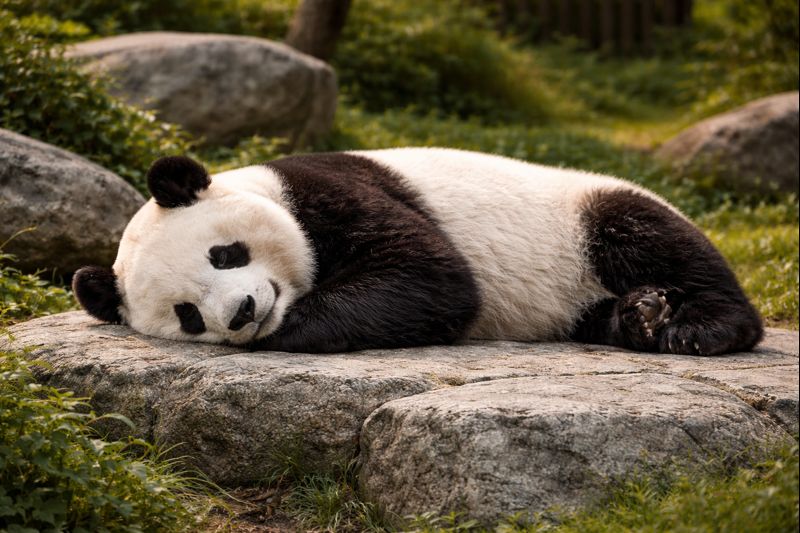
The relationship between humans and bears today is defined by a paradox. We spend millions of dollars to protect them in the wild, yet we also keep them behind bars for education, research, and entertainment. As habitats shrink and human-bear conflicts rise, the line between “wild” and “managed” is becoming increasingly blurred. What does it mean to conserve a species that requires more space than we are willing to give? And can a bear in a cage ever truly be a bear?
This chapter examines the evolving role of captivity in the 21st century. From the psychological needs of bears in modern zoos to the high-stakes world of cub rehabilitation, we explore how we are attempting to bridge the gap between our desire to see bears and our duty to keep them wild.
🐻 Table of Contents
- 🏛️ 1. The Modern Zoo — From Cages to Ecosystems
- 🧩 2. Environmental Enrichment — Stimulating the Bear Mind
- 🏥 3. Rehabilitation — Can an Orphan Return to the Wild?
- ⚖️ 4. The Ethics of Conservation — Sanctuary vs. Zoo
- 🐾 A Poetic Reflection
🏛️ 1. The Modern Zoo — From Cages to Ecosystems
In the past, zoos were mere galleries of living trophies. Today, leading institutions have shifted toward a “conservation-first” model.
- Species Survival Plans (SSP): Zoos act as genetic “ark” systems. For critically endangered species like the Giant Panda or the Asiatic Black Bear, managed breeding programs are essential to maintain genetic diversity that is disappearing in the wild.
- Education as Conservation: Encountering a bear in person can bridge the emotional gap for urban populations, fostering a sense of stewardship that abstract data cannot achieve.
- Field Support: Many modern zoos funnel a portion of their revenue directly into protecting the natural habitats of the species they exhibit.
🧩 2. Environmental Enrichment — Stimulating the Bear Mind
As we learned in Chapter 8, bears are highly intelligent and curious. In captivity, without the need to hunt or forage, they can fall into “zoochosis”—repetitive, stress-induced behaviors.
- Cognitive Challenges: Keepers use “puzzle feeders” that require the bear to manipulate objects to reach food, mimicking the problem-solving required to find insects or roots in the wild.
- Olfactory Variation: Because a bear’s world is primarily scent-based, zoos introduce new smells—from spices to the scent of other animals—to keep their sensory systems engaged.
- Structural Complexity: Modern enclosures prioritize vertical space, swimming areas, and varying substrates (dirt, grass, rock) to encourage natural movement.
🏥 3. Rehabilitation — Can an Orphan Return to the Wild?
When a mother bear is killed—by poaching, vehicle strikes, or as a “nuisance”—her cubs are often left behind. The goal of rehabilitation is to raise these cubs without them becoming “habituated” to humans.
- The No-Contact Rule: Successful rehab centers use “stealth” feeding and limit human interaction to ensure the cubs retain their natural fear of people.
- Teaching Instinct: While some behaviors are innate, many hunting and foraging skills are learned from the mother. Rehabilitators must provide environments where cubs can “practice” these skills before release.
- Post-Release Monitoring: GPS tracking of released orphans shows mixed results. Success depends heavily on the age of the cub when it was orphaned and the quality of the habitat it is returned to.
⚖️ 4. The Ethics of Conservation — Sanctuary vs. Zoo
There is a growing movement toward “sanctuaries”—facilities that do not breed or buy animals, but provide a permanent home for those rescued from the bile trade, circuses, or illegal pet ownership.
- The Purpose of Life: Unlike zoos, sanctuaries focus solely on the individual animal’s welfare rather than species-level conservation or public education.
- The Hard Truth: For some bears, the trauma of their past or their habituation to humans is so great that they can never be released. In these cases, captivity is a form of palliative care—a debt paid by humanity to the individual bear.
🐾 A Poetic Reflection
A bear in a garden is still a bear, but the wild is a song that cannot be sung behind glass.
🐻→ Next Post (Bear 28: Hybridization in a Changing World)
コメント